When the mind lets go - the sound of water
Water as both an element and a soundscape - its complexity invites us out of analytical thinking and into sensing.
As we travel through Europe by van for our sound tour, we’ve had countless opportunities to wake up in the heart of enchanted forests, where life unfolds in all its magnificent expressions; an ever-changing orchestra of sounds that never truly stops.
One of these expressions is water.
The first element to sustain life. Shaping everything from the vast oceans and rivers of our planet to the smallest and most delicate ecosystems. Water covers most of our planet, every living being depends on it, and our own bodies are largely made of it. Yet there is another quality of water that is often overlooked, so we want to pause for a moment and explore it: its sound.

When water becomes sound
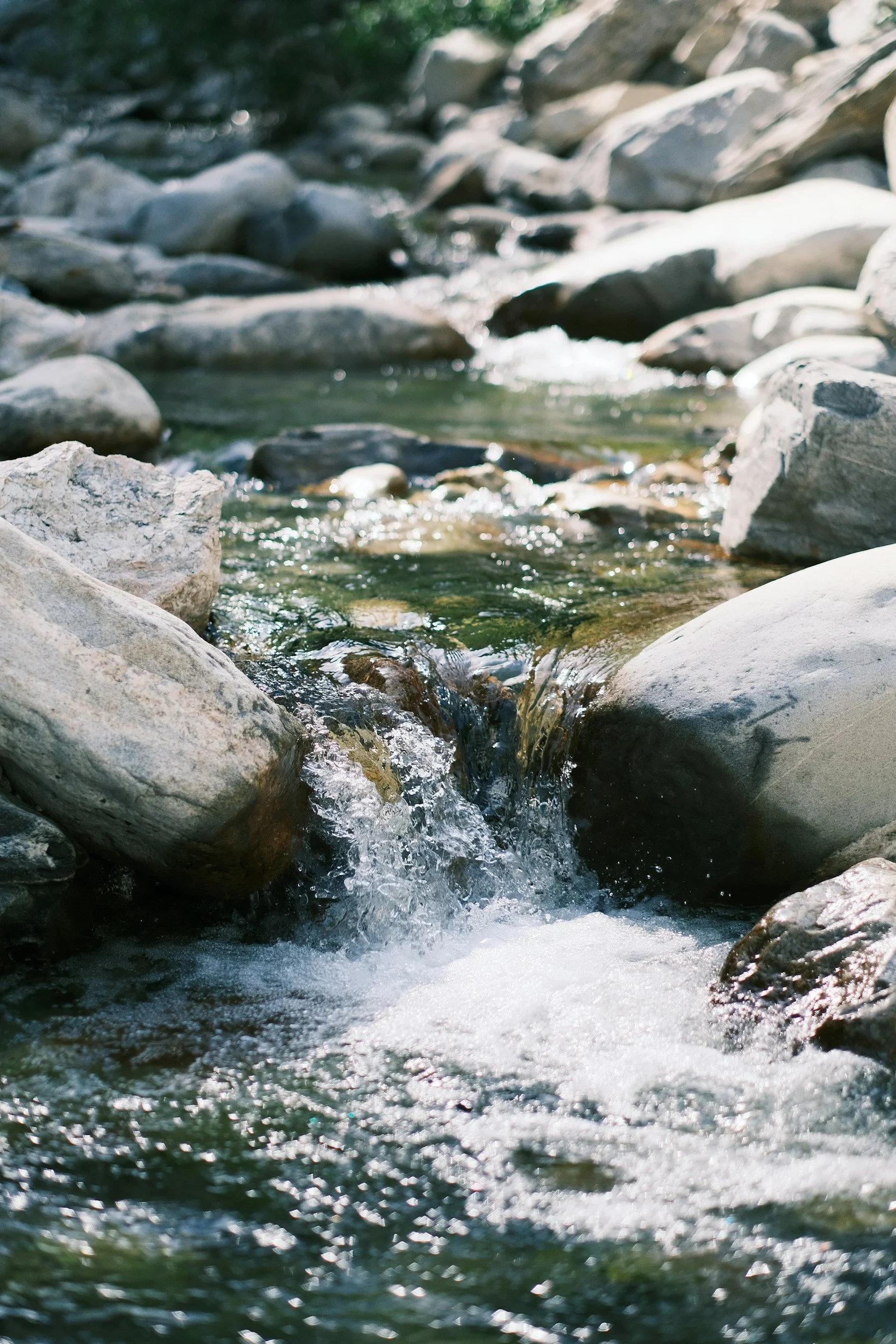
Think of the sound of a river moving over stones.
Rain falling on leaves.
Waves arriving on a shore and disappearing again.
They are simple and pure continuous streams, yet there is something remarkably complex about these sounds. They are rhythmic without being repetitive, continuous without being monotonous, predictable enough to feel familiar, yet unpredictable enough to keep the mind from needing to follow a fixed pattern.
This steady yet ever-changing sound of waves and flowing streams can offer the brain cues associated with safety and calm. Their continuously shifting acoustic texture gives the auditory system something different to engage with: a complex but gentle flow that does not repeat in exactly the same way. Research on natural sound and auditory stimulation suggests that these kinds of soundscapes can be associated with changes in brain activity, including alpha and theta rhythms — patterns often linked to relaxed awareness, inward attention, and states of rest and restoration.
There is no single tone to hold onto.
Nothing to understand,
no message to decode.
Just movement.
Ever changing, ever becoming.
This is the ultimate form of immersion for the brain.
From analysing to receiving
By nature, the mind wants to understand, analyse, compartmentalise, categorise and judge. It is constantly filtering the world around us. A mechanism that, while essential, allowing us to navigate an incredibly complex world, it can sometimes leave us exhausted or feeling almost trapped within its own interpretations.
Before a sound ever becomes a conscious thought, our sensory and nervous systems are already receiving and evaluating information from the environment. Our bodies are in a continuous exchange with the world through hearing, sight, touch, smell and movement, with many of these processes unfolding automatically and outside conscious awareness.
In other words, we don't only listen with the conscious mind. We listen with the whole nervous system. With our entire body.
And this is where natural sound can become so fascinating.
When we surrender to the sounds of the elements and allow ourselves to actually receive them, something different can happen. The mind cannot easily dissect the countless tones created by every drop of water, by every wave colliding, breaking, merging, and flowing. There is no single sound to grasp, no clear beginning or end, no fixed pattern to analyse.
And so, for a moment...
It stops analyszing.
It lets go.
It steps aside.
And in that space, a beautiful series of processes begin to unfold within the body.
What happens inside us?
Research is increasingly exploring how the sound of water and other natural soundscapes influence the nervous system and our response to stress. Some studies suggest that these sounds may support the shift from heightened arousal toward a more relaxed, parasympathetic state.
These non-linguistic, rhythmic acoustic patterns of ocean waves and flowing or rippling water sounds can contribute to a slower heart rate, reduced stress responses, changes in cortisol responses and changes in brain activity associated with relaxation.
In some subtle way, our nervous system is listening too. It is sensing rhythm, movement, intensity, space and change. It is continuously asking — often without conscious thought — Is this safe? Is there something I need to respond to? Can I soften here?
And perhaps this is one reason why the sound of water can feel so deeply familiar. We don't need to understand a river. We don't need to analyse a wave. We can simply listen.
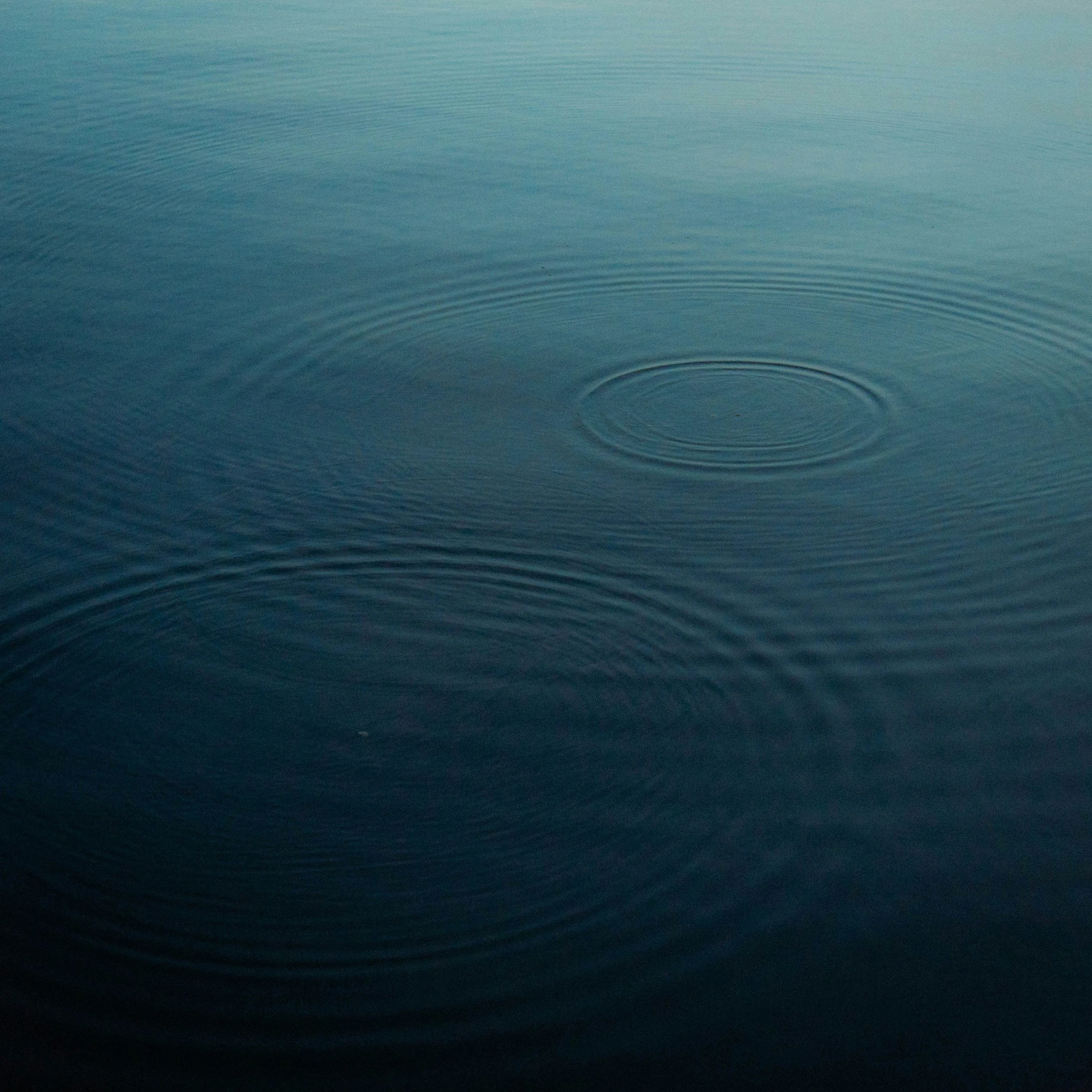
And in listening, perhaps we remember something the mind often forgets: that not everything needs to be grasped. Some things can simply be received.
This is one of the qualities we love to explore in our sound work — creating spaces where sound is not something you have to actively listen to, but something you can allow yourself to be immersed in. Spatial sound, live instruments, frequencies and elements of nature come together to create an environment where the analytical mind can soften and the senses can take over.
We are not trying to tell the body what to feel.
We are creating the space to listen.
And sometimes, that is enough.
“Be like water making its way through cracks. Do not be assertive, but adjust to the object, and you shall find a way around or through it. If nothing within you stays rigid, outward things will disclose themselves.”
Experience it yourself.
Join us for an in-person or online session and step into an immersive soundscape of spatial sound, live instruments, frequencies and elements of nature.